
25 simple blog examples you can clone (With Framework starters)

By Arso Stojović•April 22, 2026•7 min read
Sometimes you don’t need another tutorial.
You just need a real project you can clone, run locally, and tweak until things click.
If you're a beginner trying to understand how blog architecture works or just want to start a blog without overthinking, this list will help.
Below are simple blog examples you can clone today, grouped by framework, features, and real-world use cases.
All examples include code. Some are Markdown-based, some use a CMS. And where it makes sense, I’ve included BCMS starters as a clean way to move from “simple” to “scalable”.
Simple blog examples by framework
Choosing a framework is often the fastest way to create your own blog. Here are some of the best blog examples for beginners.
Next.js blog starters
If you're using React, these are the most practical starting points.
BCMS Next.js Starter

If you want a simple blog that can grow:
Clean content structure
API-first approach
Easy to extend later
A good middle ground between Markdown and full CMS setups.
To start a project:
npx @thebcms/cli create next starter simple-blog
Next.js official blog starter

A clean, minimal blog example:
Markdown-based blog posts
Static generation (great for search engine visibility)
Simple structure you can actually understand
If you're new, this is the safest place to begin.
🍴: GitHub
Tailwind Next.js starter blog

Feels like a real product, not just a demo.
Dark mode
Tags and search
Clean typography-focused blog design
A great personal blog starter with more polish.
🍴: GitHub
Nuxt blog starters
BCMS Simple blog starter (Nuxt)
This Simple blog starter is a great example of a simple blog that doesn’t feel limiting.
Clean structure
Ready-to-use blog pages
CMS included without complexity
You can spin this up fast and start writing immediately.
CLI:
npx @thebcms/cli create nuxt starter simple-blog
Nuxt content blog

A classic blog example for beginners.
File-based content
No backend
Super fast
🍴: GitHub
Nuxt Blog (advanced CMS)

When your blog grows, this Nuxt blog offers:
Categories
Tags
Dynamic content
This is where a simple blog becomes a real content system.
Astro Blog Starters
If performance and simplicity matter, Astro is a strong choice.
Astro Blog Starter (Official)
.webp?webp=t&sizeT=900x-1&apiKey=670e90c0cedcf9e4d34d24e7.a2132a1499ac4abf17c3c3183070d09975292fb5fe5c0f15d2d8c9288171554b.670e90c0cedcf9e4d34d1a23)
A clean example of a blog focused on speed.
Minimal JavaScript
Fast
Markdown-based
🍴: GitHub
BCMS Astro simple blog starter

Astro simple blog starter is a production-ready base for building content-focused static sites
Performance + CMS
Structured content
Great when your blog covers a wide range of topics.
Start a project:
npx @thebcms/cli create astro starter simple-blog
Astro paper (Minimalist blog)

Typography-first
Dark mode
No distractions
Perfect if your writing style is the main focus.
🍴: GitHub
Astro Blog Template

Simple structure
Easy to clone
A straightforward blog website starter.
Gatsby Blog Starters
Gatsby is still a solid choice for static blogging.
BCMS Gatsby Starter
Minimal Gatsby starter built for content-focused websites
Static-first
Structured content
Flexible data layer
Start your project:
npx @thebcms/cli create gatsby starter simple-blog
Gatsby Starter Blog
A classic blog example.

Markdown posts
RSS
SEO
🍴: GitHub
Gatsby Advanced Starter

A more feature-rich blog website.
Pagination
Tags
SEO
🍴: GitHub
Simple blog examples by feature type
Not all blogs are built the same way. The type of blog you choose depends on how you want to manage content.
Markdown-based blogs (No backend)
These are the simplest blogging examples.
No backend
Content stored in files
Easy to deploy
If you want the simplest possible setup, this is it.
Next.js Markdown Blog (Minimal)
Demo: leerob.io
A great personal blog example built by a developer.
Features:
MDX-based blog posts
Simple file structure
No CMS
Eleventy (11ty) Blog Starter
One of the cleanest blog examples for beginners.
Demo: Eleventy base blog
Features:
Static site generator
Markdown-first
Extremely simple
When to use this:
Personal blogs
Quick experiments
No dynamic content needed
Minimalist design blogs (Focus on writing)
These focus on writing.
Clean UI
Strong typography
No clutter
Ideal if your blog writing is the main value.
Bear Blog (Ultra Minimal)
A perfect example of a good blog with zero clutter.
Demo: Bear Blog
No distractions
Ultra fast
Content-first
Quartz (Digital Garden Style Blog)
More than a blog, a writing system.
Demo: Quartz
Linked notes
Clean UI
Knowledge-focused
Hugo PaperMod Blog
A popular choice for a simple blog with a clean design.
Demo: PaperMod Blog
minimalist UI
fast
SEO-friendly
When to use this:
writing-first blogs
knowledge sharing
long-form content
Best blog examples by use case (Projects you can clone)
Instead of talking about blog types in theory, let’s look at real projects you can clone based on what you want to build.
Each of these is a practical blog example you can fork, run, and turn into your own project.
Portfolio blog (with writing focus)
🍴: GitHub
Real production site (docs + blog + content)
MDX-based blog posts
Component-driven structure
Great if you want a portfolio-style blog that mixes writing and UI work.
Lifestyle / Fashion Blog
A flexible starter that can easily become a fashion and lifestyle blog.
Modern layout
SEO-ready
Scalable structure
Good base if you're building a lifestyle blog with content + branding.
🍴: GitHub
Food Blog / Recipe Blog
A solid starting point for a food blog or recipe blog.

If you want to do this properly:
Structured recipes
Reusable content models
Scalable setup
Much better than hardcoding recipes into Markdown.
Start your project:
npx @thebcms/cli create astro starter recipesTech blog
Demo: Next.js MUI Blog Starter
If you're planning to build a tech blog, this is a great place to start.
It’s a clean Next.js setup designed for developer-focused content, with just enough features to feel a complete tech blog structure:
MDX-based blog posts (perfect for code snippets)
Built-in table of contents
Tags and structured blog posts
Clean and readable layout
Ideal if your blog covers developer topics.
Photography Blog
Demo: Hugo Gallery
A gallery-first blog theme.
image grids
fullscreen viewing
minimal text
Perfect for a photography blog where visuals are the main content.
Art & Design Blog
Demo: Stack
If you're building an art and design blog, layout and presentation matter as much as the content.
Clean, modern layout
Strong typography
Great support for images and visual content
What makes this a strong design blog example is its balance; it feels minimal, but still expressive enough for creative work.
Perfect if you want your blog to showcase both visuals and ideas without building everything from scratch.
Portfolio + Blog + Content (Advanced combo)
This is what happens when a simple blog evolves into a content platform.
If you want to go beyond a simple blog, this Portfolio starter is one of the best real-world setups.

Combines blog + structured listings
Multi-page content system
Great for dev portfolios
Ideal if you want your website and blog to actually do something (not just exist).
Star building:
npx @thebcms/cli create astro starter personalBonus: How to Pick the Right Blog Starter
If you're unsure, keep it simple.
1. Choose your Frontend
Here are some popular choices among developers for building a successful blog:
2. Static or CMS?
Markdown: Fast and simple
CMS: Flexible and scalable
3. Blog features
Think about:
search
tags
pagination
Conclusion: Clone first, optimize later
You don’t need a perfect setup.
You need momentum.
These blog examples to inspire are here to help you skip the blank page and start building something real.
- Clone a project
- Explore the code
- Write your first post
If you outgrow simple setups, tools like BCMS help you scale without rewriting everything.
Start simple.
Keep your blog consistent.
And turn it into something people actually want to read.
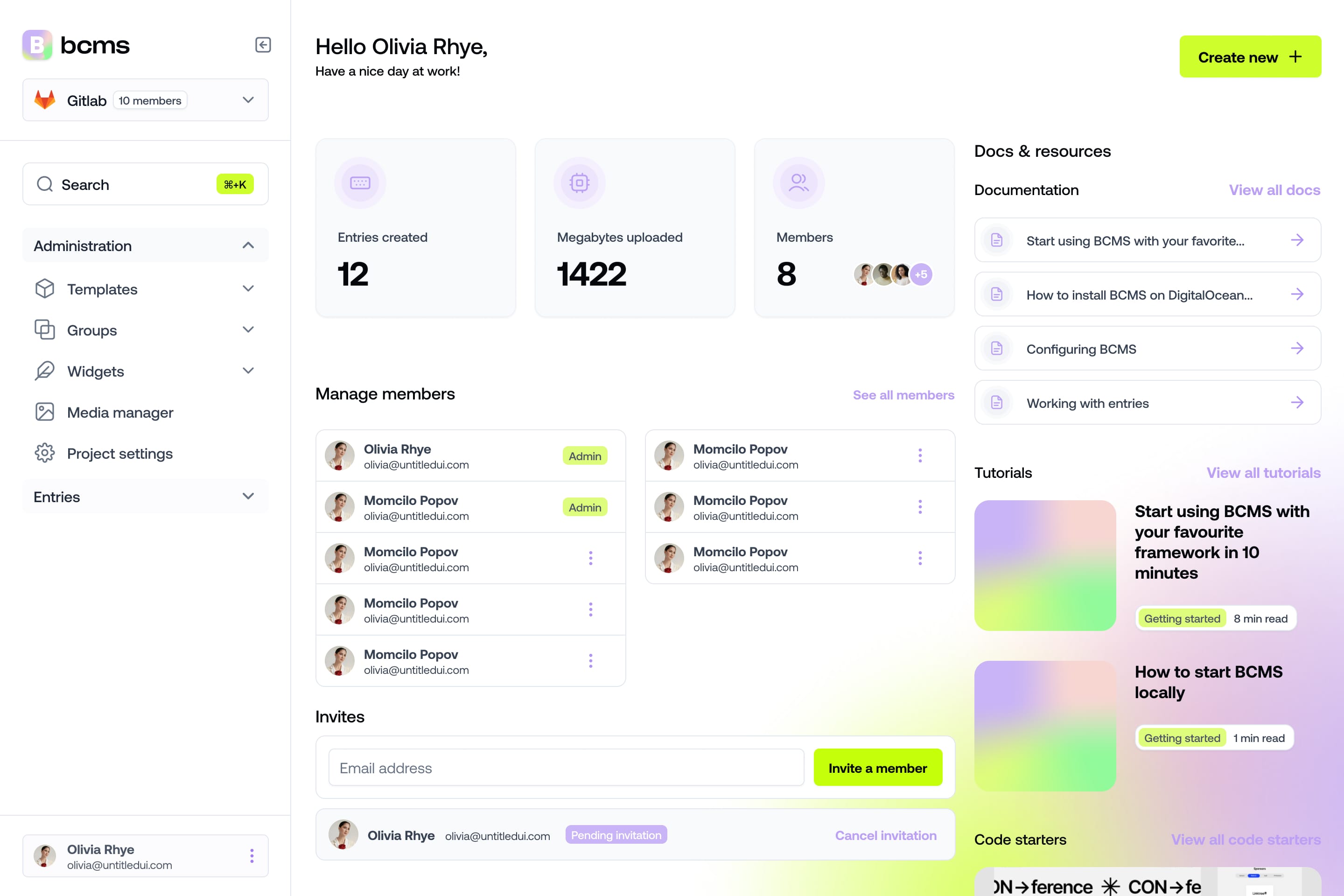
It takes a minute to start using BCMS
14-day free trial · No credit card required
Try BCMS free
Headless CMS for developers. Agents and clients can edit content. You keep the code.
14-day free trial · No credit card required
Try BCMS free
14-day free trial. No credit card. It takes a minute to start using BCMS.
Content
Try BCMS free
Headless CMS for developers. Agents and clients can edit content. You keep the code.
14-day free trial · No credit card required
Continue reading

Best headless CMS for AI SaaS in 2026
Choosing the right headless CMS is critical for AI SaaS products in 2026

Contentful vs WordPress: which CMS to pick (and when to migrate)
A practical Contentful vs WordPress comparison: architecture, Next.js setups, Contentful CLI migrations, competitors, and when BCMS is the better alternative.

Multisite CMS: Complete guide to managing multiple websites
Multisite CMS: Streamline your workflow & manage multiple websites efficiently. Centralize content, simplify updates, and gain control over all your sites.