
Top 9 Jamstack Frameworks to Choose in 2026

By James Oluwaleye•January 28, 2026•10 min read
There are more Jamstack frameworks to choose from than ever before, which can make it hard for developers to decide. Each framework has its own strengths in terms of speed, how it displays content, its ecosystem, and how easy it is to use.
Picking between a React-based option like Next.js, a simple static generator like Hugo, or a new option like Astro can feel like comparing very different things.
How can you choose the right tool for an online store, a documentation site, a highly interactive dashboard, or a basic blog?
This article will help by looking at nine popular Jamstack frameworks. I’ll highlight important factors to think about, show how to get content from BCMS in each framework, and point out what each one does best so you can choose the best option for your next Jamstack project.
Criteria for choosing a Jamstack framework
When you're choosing a Jamstack framework, pay attention to these four important things for Jamstack architecture, and you'll find the right framework for your project:
Rendering strategy: Some frameworks create all the pages ahead of time, Static Site Generation (SSG), some make pages when they are requested, Server-Side Rendering (SSR), and others combine both methods, Incremental Static Regeneration (ISR), or let the browser handle it, Client-Side Rendering (CSR). Think about whether your website will mostly have fixed content, need real-time updates, or include many interactive features, and pick a framework that fits those needs.
Build speed: As your website gets bigger, you don’t want it to take a long time to build. Tools like Hugo can quickly create thousands of pages in seconds, while JavaScript-based frameworks might take longer but offer extra features. Make sure your rebuilds are fast.
Developer experience: Having good file organization, instant updates (like hot reload), and support for TypeScript can make your work easier. A strong plugin system or ready-made templates can save you time and help you avoid starting from scratch.
CMS support: If you’re using a headless Content Management System (CMS), look for frameworks that provide easy-to-use SDKs or plugins. For example, BCMS offers a JavaScript SDK that allows you to get and store content with just a few lines of code no need for complicated HTTP requests.
Top Jamstack frameworks to consider in 2026
Now that you understand the important points for choosing a Jamstack framework, let’s look at some of the most popular frameworks and SSGs that are becoming popular in the Jamstack community.
Next.js: One of the most used Jamstack frameworks

Next.js is still the top choice for Jamstack websites in 2026, handling about 80% of live projects. This is because it has a flexible way of rendering content and a strong set of tools.
It supports different methods like Static Site Generation (SSG), Server-Side Rendering (SSR), Incremental Static Regeneration (ISR), and Client-Side Rendering (CSR). This makes it a great option for a wide range of websites, from busy marketing pages to interactive dashboards.
Here’s how we use Next.js together with BCMS to fetch blog content.
// pages/index.tsx
import { bcms } from "@/lib/bcms";
import type { BlogEntry } from "@/bcms/types/ts";
export async function getStaticProps() {
  const blogs = (await bcms.entry.getAll("blog")) as BlogEntry[];
  return { props: { blogs } };
}
export default function Home({ blogs }: { blogs: BlogEntry[] }) {
  return (
    <div>
      {blogs.map((blog, i) => (
        <div key={i}>
          <h2>{blog.meta.en?.title}</h2>
        </div>
      ))}
    </div>
  );
}
Hugo

Hugo is the fastest option in Jamstack. Written in Go, it compiles templates and content in just milliseconds even for thousands of pages. With Hugo, you write your content in Markdown and add front-matter, run one command, and deploy the resulting static files to any Jamstack-friendly CDN. Hugo also has a built-in asset pipeline that can handle SCSS and images, so you get a complete Jamstack build tool without needing to install Node or complicated settings.
Eleventy (11ty)

Eleventy is the easiest way to get into Jamstack. You just point it to your content folder (like Markdown, HTML, Nunjucks, etc.), run a build, and it creates static HTML ready for any CDN. There’s no extra code needed unless you add it yourself, so your site stays simple. You can use plugins to bring in dynamic data during the build process, like entries from a headless CMS, API results, or markdown files, and combine them into your static output. For smaller teams or projects focused on content, Eleventy is the quickest way to start using Jamstack without complicated learning curves.
Astro

Astro has become really popular, its GitHub stars doubled in 2024 because it sends no JavaScript to the browser by default and only loads interactive parts of your page. It works great for static site generation (SSG) and is starting to test server-side rendering (SSR), making it a great option for content-focused websites that want both speed and ease of use.
First, install using BCMS steps, and then fetch data from the BCMS project and display using Astro.
---
import { bcms } from '../bcms';
import type { BlogEntry } from '../../bcms/types/ts';
const blogs = (await bcms.entry.getAll('blog')) as BlogEntry[];
---
<main>
  <div>
    {
      blogs.map((blog) => (
        blog.meta.en &&
        <h2>{blog.meta.en.title}</h2>
      ))
    }
  </div>
</main>
SvelteKit
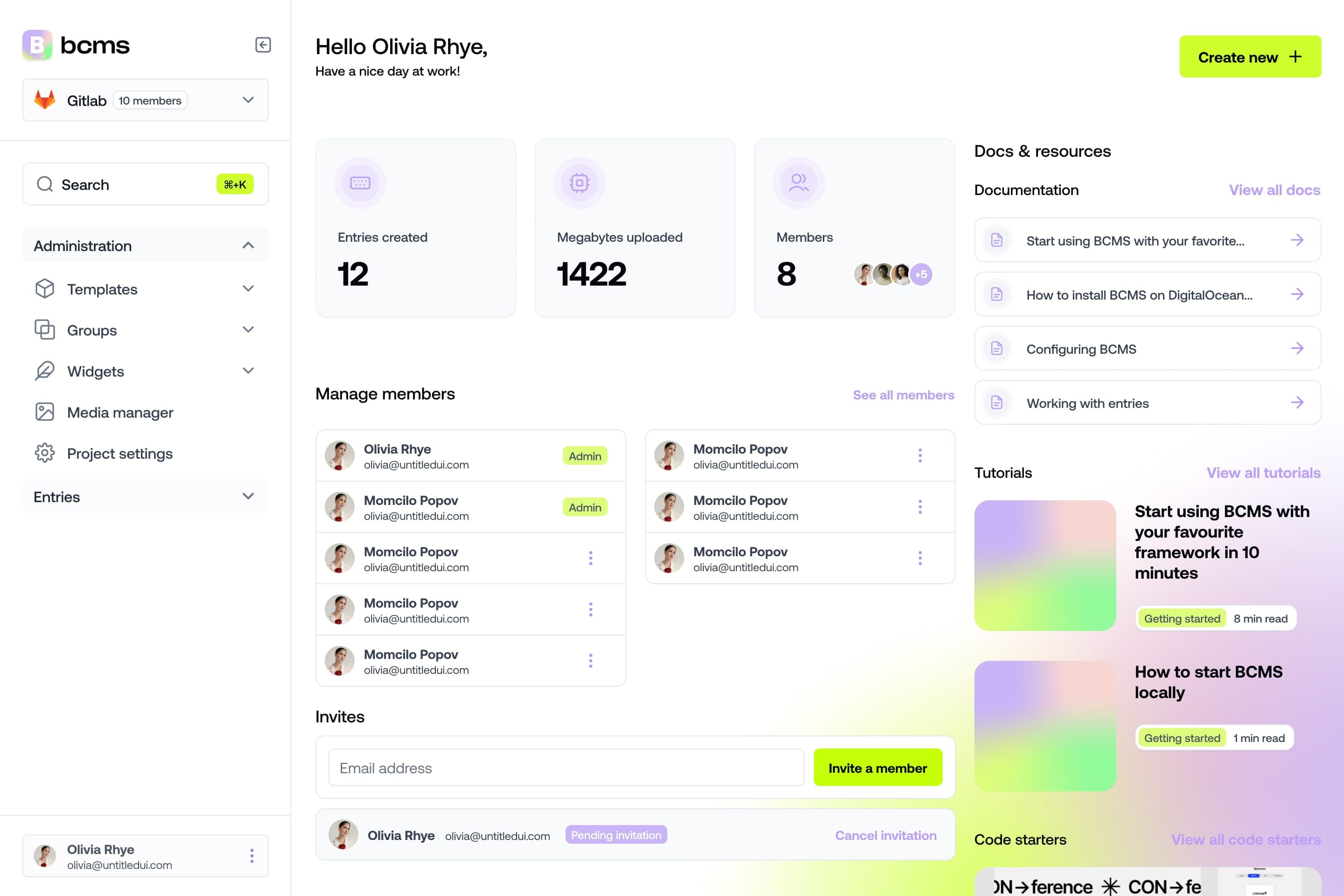
It takes a minute to start using BCMS
14-day free trial · No credit card required

SvelteKit really embraces the Jamstack power by turning your components into small amounts of JavaScript that only run where needed. You can create your site as a completely static package, upload it to an edge CDN, and SvelteKit will take care of making interactive parts work without needing extra framework code on the user's device. It also comes with built-in support for server-side rendering and static prerendering, so you can make your Jamstack site as dynamic or as simple as you want, depending on what you need.
Gatsby

Gatsby was one of the first to create Jamstack with its GraphQL layer that brings together content from headless CMSs, files, and APIs into one data structure. When you build your site, Gatsby gathers data from all sources, creates optimized static files, and preloads client code so navigation feels super fast. It’s perfect for content-rich Jamstack sites that need image adjustments, complex page layouts, and a strong plugin system.
Although it may take longer to build very large sites, Gatsby’s design still allows for quick initial loading and smooth client navigation. First, install using BCMS steps, and then fetch data from the BCMS project and display using Gatsby.
import React from "react";
import { BlogEntryMetaItem } from "../../bcms/types/ts";
export default function BlogPage({ pageContext }:
{ pageContext: { blog: { meta: BlogEntryMetaItem } } }) {
  return (
    <main>
      <h1>{pageContext.blog.meta.title}</h1>
    </main>
  );
}
Learn more: Gatsby tutorial
Nuxt.js
If you’re a developer who likes using Vue.js, Nuxt.js is a great tool for building Jamstack applications. It makes it easier to create both universal and static web apps, giving developers a smooth experience while also addressing common problems like organizing code and improving SEO.
Nuxt.js automatically splits your code, has a strong routing system, and allows server-side rendering, making it a top choice for fans of Vue.js. After following the installation process, this is how we fetch data using Nuxt.js in BCMS:
<template>
  <main>
    <div v-for="(blog, i) in blogs" :key="i">
      <h1>{{ blog.meta.title }}</h1>
    </div>
  </main>
</template>
<script setup lang="ts">
import { bcms } from '~/bcms';
import type { BlogEntry } from '~/bcms/types/ts';
const { data: blogs } = await useAsyncData(async () => {
  const entries = await bcms.entry.getAll('blog') as BlogEntry[];
  return entries.map(entry => ({
    meta: entry.meta.en,
  }));
});
</script>
Remix

Remix changes the way Jamstack apps get data by using web standards and built-in caching. Its loader functions work on the server (or near the server), gathering all the data your page needs before it shows up, and then sends HTML and JSON to the client. This avoids the common delays from APIs in single-page applications and keeps your Jamstack pages fast and reliable. It also allows for progressive enhancement, meaning you start with a fully functional page and can add interactive features later. With Remix, you can launch your whole Jamstack site, including dynamic form handling or secure endpoints, as one complete app.
Svelte (Core)
Svelte isn’t a complete framework, but it's great for Jamstack as the best tool for creating “islands.” This means you can create individual interactive parts, like widgets, that can work on their own. You write these components using Svelte's easy-to-understand syntax, and the compiler generates very little raw JavaScript. This helps keep your Jamstack site quick and lightweight. Use Svelte for areas where you want detailed interactivity, like forms, charts, or maps, while the rest of your page stays as simple static HTML served from a CDN.
Comparison table of Jamstack features

The comparison table shows how different Jamstack frameworks support various features for modern web development. Here’s a breakdown of what those features are and why they are important:
SSR: Frameworks like Next.js, Nuxt.js, Remix, and SvelteKit use SSR, which means that web pages are created on the server every time someone makes a request. This is especially useful for apps that have data that changes often or need content that is specific to individual users. It ensures that the information is always current and good for search engines.
SSG: Most frameworks on the list support SSG, which means that content is made when the website is built and then served as simple HTML files. This method makes websites load very quickly and keeps hosting costs low. Frameworks like Astro, 11ty, Gatsby, and Hugo are excellent for this, making them ideal for blogs, portfolios, and documentation.
Client-side rendering (CSR): CSR allows parts of a webpage (or the whole app) to be displayed in the browser using JavaScript. Frameworks like Next.js, SvelteKit, Remix, and Nuxt.js support CSR, which is great for creating interactive features, like dashboards or changing user interfaces.
Server-side routing: This feature lets developers manage how users navigate through the website on the server. It is useful for protecting certain pages, dealing with dynamic content, and redirecting users. Frameworks like Remix, SvelteKit, and Next.js have strong routing capabilities that work with the backend.
File-based routing: Many modern frameworks, including Next.js, Nuxt.js, SvelteKit, and Astro, automatically create routes based on the organization of files in the project. This makes setting up routing easy because you don’t have to write everything out manually.
Component framework: Some frameworks focus on building user interfaces using separate, reusable components (like React, Vue, or Svelte). Next.js, SvelteKit, Remix, and Nuxt.js use this approach, which helps create a flexible and easy-to-manage frontend. On the other hand, static site generators like Hugo or 11ty focus more on content rather than interactive UI components.
Conclusion: Jamstack development tools depend on your needs
With so many Jamstack frameworks available today, choosing the right one depends on what your project needs and how familiar your team is with the technologies involved.
If you want a complete solution using React that has flexible rendering options and edge support, Next.js is a commonly used choice. For very fast static sites that require little setup, Hugo and Eleventy are great options. If you like the idea of mixing and matching different components or reducing unnecessary JavaScript, Astro is an interesting new option.
SvelteKit and Remix both follow modern web standards. SvelteKit works by removing framework code, while Remix takes advantage of web APIs and progressive enhancements. Nuxt.js provides a top-notch experience for Vue users, and Gatsby is the best choice if you need a lot of plugins and a GraphQL-based data layer.
If Vite is your bundler of choice, BCMS pairs with it as a lightweight Vite CMS: install @thebcms/client, fetch in modules or components, keep HMR-fast local dev.
Hugo remains a top SSG choice on the Jamstack. Pair it with BCMS as a Hugo CMS when you want a real editing UI before the static build.
Lastly, the core Svelte compiler is a solid option for creating interactive “islands” within any static site. You can confidently choose the Jamstack framework that offers the best balance of performance, developer experience, and ease of maintenance for your next project.
It takes a minute to start using BCMS
14-day free trial · No credit card required
Try BCMS free
Headless CMS for developers. Agents and clients can edit content. You keep the code.
14-day free trial · No credit card required
Try BCMS free
14-day free trial. No credit card. It takes a minute to start using BCMS.
Content
Try BCMS free
Headless CMS for developers. Agents and clients can edit content. You keep the code.
14-day free trial · No credit card required
Continue reading

AI Structured Content: Why AI depends on structure more than ever
How AI structured content is making machine-readable content for AI systems. Learn how MCP, structured outputs, metadata, and content models help AI.

BCMS AI Agent capabilities: What makes an AI Agent useful?
Explore AI agent capabilities: understand what AI agents can actually do, how they use AI, and how AI agents automate tasks with real-world examples.

UI Framework vs UI Library: What’s the difference in 2026?
UI framework vs UI library: learn the real difference in 2026. Compare frameworks, libraries, component libraries, and CSS frameworks with practical examples.